
























How do you write the mean girl trope?
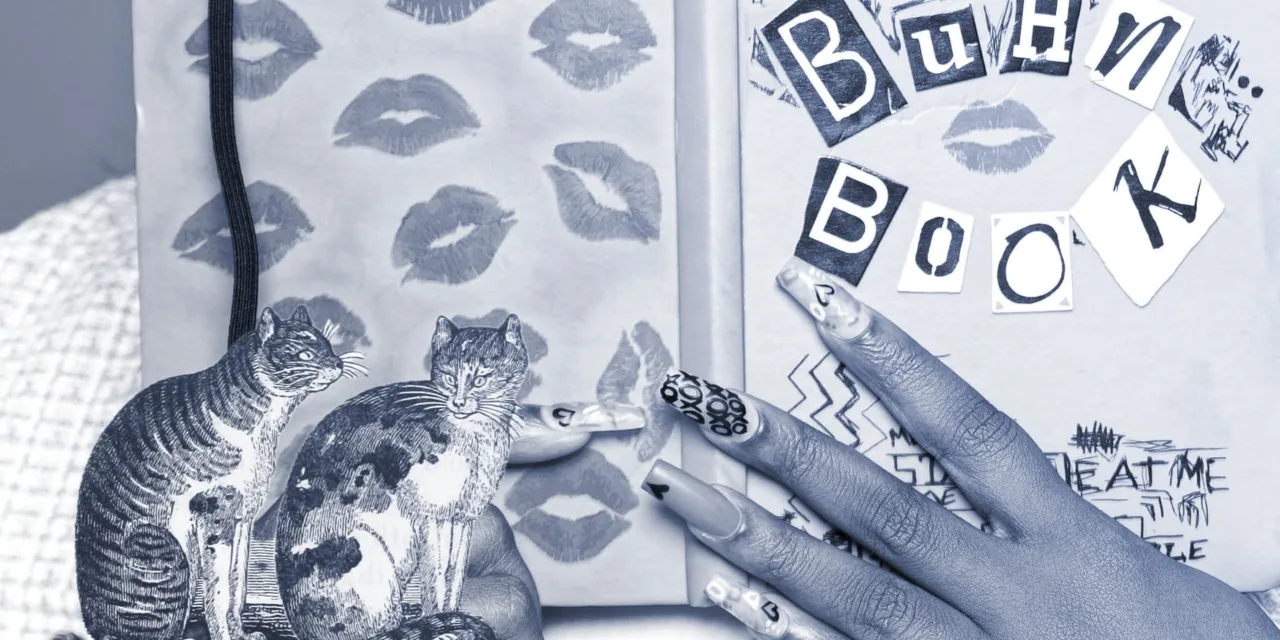
“Hiii just a question do you have an advice on how to write a ‘mean girl’ without having like the hollywood stereotypes? I’m currently writing one of my main characters for my indie project and I got stuck into building her and on how it impacts her and her character. I was also having a hard time on what her goal should be.”
Tropes are often tropes for a reason, so don’t be too worried about leaning into them. The mean girl trope has become so ingrained in pop culture that you don’t have to feel like you must reinvent the wheel. It’s not as difficult as you might think to write a trope without leaning into cliché, and the fact that you already know that your mean girl needs motivation to be a believable and well-rounded character means you’ve covered the hard part already!
So let’s look at some tips for how to lean into the the trop without resorting to cliché:
Understand why people are “mean”
Mean girls are cruel. So, to write the trope well, you need to understand what drives someone to behave cruelly. Meanness rarely exists in a vacuum and is usually a response to something like fear, insecurity, trauma, learned behaviour, or a desperate attempt to maintain control in a world that feels chaotic.
What might your character be protecting? Is she afraid of being seen as weak? Did she learn that cruelty equals power from watching her parents? Is she terrified of losing her social standing because it’s the only thing that makes her feel valuable? Has she been hurt before and decided that striking first is safer than being vulnerable?
The most interesting mean girls aren’t cruel because they’re inherently evil. They’re cruelty usually stems from a learned behaviour, because, at some point, they learned cruelty was effective or necessary.
Give her a goal beyond “being mean”
You already know that this is necessary, so half the battle is won. A mean girl whose only goal is to torment others isn’t an interesting character, and all characters ride or die on how interested readers are in getting to know them.
Think about what your mean girl actually wants. Some possibilities might include:
- Survival: She may try to maintain her social position because losing it feels like losing everything.
- Approval: Perhaps she’s desperate for validation from a parent, peer group, or romantic interest.
- Control: If other areas of her life feel chaotic (family problems, mental health struggles, uncertainty about the future, etc.), controlling her social environment might be her way of coping.
- Protection: She might be guarding something; a secret, a vulnerable friend, her own fragile self-image.
- Achievement: Maybe she’s genuinely ambitious, and her meanness is a misguided strategy for eliminating competition.
Her meanness should be a tactic she uses to achieve her goal, not the goal itself. This is the distinction between a three-dimensional character and a cliché. She needs a goal, a motivation, and a conflict.
Show how her behaviour impacts her
One thing the Hollywood stereotype often misses is the cost of being cruel. In reality, people who behave badly usually pay for it in some way, even if it’s internal. This can often lead to a self-perpetuating cycle, as the character compensates for the negative results by attempting to assert more control over the situation.
A mean girl might experience:
- Isolation: She may have many “friends” but no one who truly knows her because cruelty keeps people at arm’s length.
- Exhaustion: Maintaining a persona is tiring. She might be constantly performing, and never able to relax.
- Self-loathing: Many mean people don’t actually like themselves. Her cruelty might be a way of projecting outward what she feels inside, or making others feel what she thinks she deserves.
- Paranoia: If she’s climbed to the top by tearing others down, she knows exactly how quickly she could fall and needs to protect her position.
- Missed connections: Show moments where her cruelty costs her something real. This could be a potential friendship, a moment of genuine intimacy, or even an opportunity.
Avoid the visual shorthand
Hollywood loves to signal “mean girl” through appearance: the perfect hair, the designer clothes, the eye roll, the friendship group. While these details aren’t inherently bad, relying on them too heavily can make your character feel like a type rather than a person.
Make sure you also reveal character through choices and actions, rather than just relying on visual cues. How does she treat people when no one’s watching? What does she do when she’s alone? What are her private habits, her secret interests, her unexpected kindnesses? A mean girl who’s secretly obsessed with birdwatching or writes poetry she’d never show anyone becomes infinitely more interesting than one defined by her signature lipstick or hair.
Don’t neglect relationships
A character’s relationships reveal who they are. Think about how your mean girl interacts with different people:
- Is she cruel to everyone, or does she choose specific people? Why them?
- Does she treat her friends well, or does the meanness extend to them too? Are these genuine friendships or alliances of convenience?
- Is she deferential to teachers and parents while mean to peers, or is she cruel across the board?
- How does she respond to someone who is immune to her tactics?
The contrast between how she treats different people can reveal her motivations and vulnerabilities.
Let her be more than one thing
The most important thing you can do is refuse to let her meanness define your character entirely. Give her contradictions. Perhaps she’s cruel to her social rivals, but genuinely kind to animals. Maybe she’s dismissive of most people, but fiercely loyal to one particular friend. She might be terrible at parties but surprisingly thoughtful one-on-one.
Real people contain multitudes, and your mean girl should too.